Showing posts with label photograph wedding. Show all posts

Newborn Photography To Capture The Moment


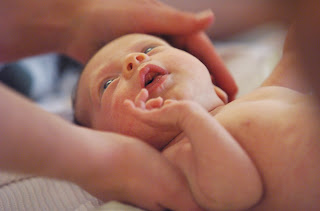
The baby is finally here, and everyone wants pictures! But every time you try to take pictures, your beautiful baby looks like a little wrinkly old person instead of that exquisite being you see before you. That is why many people consider hiring a photographer to take beautiful newborn photography . Well - you can do it yourself. You just need to learn my secret. Here are some tips to capture your newborn for the best results.

- First things first - Turn off the Flash! Use window light for the best natural soft light to show off your baby. Find a window that has an abundance of good light

- not direct sun light streaming in, but good indirect sunlight.

- Remove clutter from the background of your shot by putting the baby in a carrier with a solid colored blanket covering it, or on the bed with white sheets.

- Remove the babies clothing down to the diapers. Less clothing is better for newborn photography to really show the baby as they tend to not fit clothing well at this age, and clothing is more of a distraction. If the diapers have cartoons on them, try to cover the cartoons by folding the diaper over, or putting fabric over that area - or take your chances and remove that diaper! Work quickly at this point if you choose this route.

- With your camera ready, making sure the babies face and body is turned toward the light from the window, start taking pictures from different angles. Try to fill the frame with the baby and the solid colored blanket or sheet - avoiding additional clutter or items that may get into your background. Do not try to get the baby to smile - just take a series of images from different angles, with some of the baby looking at the camera and some of the baby's profile, some of the top of the head etc. Keep working your way around the baby talking and singing to your baby to try to engage them. If the baby starts fussing, soothe them as needed and when they are calm, try again. If they fall asleep - no problem - photograph them while sleeping! Take more pictures than you think you need - you never know which ones you will like. Make sure to get come full body, some half body and some close ups of face, hands, feet and other cute, memorable body parts - like the fuzzy wrinkly shoulders, funny hair lines, and more.

- Now it is time to develop the images- whether on your computer or at the lab, develop your newborn photography pictures and then sit down and go through them, looking with an artistic eye to choose the ones that capture the baby that you see, and this time in your life.

Photograph Wedding


Many couples get so caught up with planning all the obvious details of their wedding--such as the cake, the wedding decorations, the gown and gifts for members of the wedding party--that they often overlook the importance of selecting the right wedding photographer. It’s important to remember that the photographer you choose will be responsible for capturing the moments and memories of what may be the most important day of your life! With this in mind, you'll want to take great care in selecting a wedding photographer considering there are no second chances.

As you might imagine, photograph wedding is one of the most challenging types of professional photography. The wedding photographer has to make everyone look beautiful, shooting in a multitude of locations in all kinds of weather conditions--and accomplish all this in minimum amount of time. At the same time, your wedding photographer should have the personality to complement you on your most joyous day. Take your time and follow some of the simple suggestions discussed below, and you will most certainly be satisfied with the outcome.

Where Do You Begin?
Personal referrals or asking friends, relatives and co-workers for suggestions, is a great place to start. Typically, people who have had positive experiences with photographers are more than willing to share that information. In addition, you’ll already have some insight about the photographer’s personality before you actually meet. After compiling a preliminary list, visit each photographer’s web site and thoughtfully review his or her online portfolio. If a portfolio looks appealing you, chances are, that photographer might be a good fit. Next, call or email each photographer on your list. Through this initial contact, you can determine the photographer’s availability, the type of work they specialize in (candid or traditional) as well as an estimate of the cost and what you’ll receive for that fee.

Schedule appointments with the photographers who seem most appropriate and ask to view their portfolios in person and discuss more details. Ask each of them to show you a complete portfolio of a single wedding--this will give you a much clearer sense of what you can expect than a collection of choice shots from several different events. Pay attention to whether the photographer is adept at portraying individual expressions and personalities. Ideally, these meetings should include the bride and groom as well as the bride's parents since you will all be interacting with the photographer.

What Questions Should You Ask For Photograph Wedding ?
Be sure to write down all of your questions beforehand, and take thorough notes during the meetings. Although most professional photographers will provide you with a clear outline of their services and fees prior to your meeting, you will, in all likelihood, still have a large number of questions to ask. Remember, the more information you have, the more confident and relaxed you’ll feel on your special day. The following are some questions, courtesy of you may wish to consider asking:

•How will you show me pictures for selection (e.g., electronic, proofs, contact sheets, online gallery, etc.)?
•Will you help me choose the final pictures?
•How will you make it easy for friends and family to order reprints?
•What are the costs of the various levels of coverage?
•Are there different degrees of coverage?
•What is your photography style; photojournalistic, traditional, mixed, etc.?
•How much for the duplicate prints, albums, folios, enlargements, thank you cards, etc.?
•What’s your time frame for preparing the pictures for my selection?
•How about engagement session?
•How long do I have to make up my mind as to which pictures I want and how many?
•How long have you been in business?
•What kind of guarantee comes with my hiring you?
•What’s your philosophy for photographing weddings?
•Will you have an assistant?
•Do you have travel fees?
•How much is your overtime fee?
•What do you plan to do at my wedding to make my wedding photographs unique and personal to me?
•Do you have a backup?
•Will you be shooting my pictures personally?
•Will you use film or digital?
•What's your payment policy?
•Do you give any guarantees on your services and photographs?
•What is the possibility of the pictures fading?

How Much Will It Cost?
•Plan to allocate a significant portion of your wedding budget to ensure photographs are perfect. Expect to spend at least $1000 on a professional wedding photographer to document your event. Albums and prints are usually extra. Other extras that may increase your bottom line include additional hours, additional photographers, custom albums etc. etc. Add on too many extras – and your photography budget could quickly creep to $5000 and beyond! Photograph wedding does not need to be so expensive if you only know how to handle it.

Making a Commitment
At this point, you should have a relatively clear idea of which photographer is best suited to capture your wedding day memories. Once you have made a decision, be prepared to leave a deposit to reserve the date. You may still wish to reassure yourself by asking about a few final details. For example, find out what the photographer's policy for wedding-date changes is and what the alternatives are if he or she is not available on the backup date. Also, ask about their policy for an unexpected cancellation. If you feel the photographer is right for you, then relax and make the commitment with the confidence that you’ve made a well-formed, intelligent decision in planning the most important day of your life.
Website Photography


So you plan to create a website photography and topics related to photography? The most important thing to do for this is to gather and create useful and interesting content for the website. Remember that your photography website is going to become a marketing tool for your website, and so your website content should accordingly reflect this. You could actually create the web design for your photography website using the numerous software and templates available on the Internet. However, if you do use this software or template, you will not be able to create a unique website as anyone else can design a website using the same software or template, and will thus resemble your photography website.

So if you plan to have a photography website that is unique, you could enlist the services of a professional web designer. The web designer helps you create a website using his expertise. If you are not satisfied, you could make some changes to the designs he gives, to finally come across the best website designs. The additions and deletions you make in the website design all come in the web designer’s package, and he is not to charge extra for that work. The professional web designer may cost a bit but compared to the profits you make through the website, this fare can be considered negligible.

If you plan to write your own content for your photography website, remember to appeal to the emotions of your web site visitors. Make it a point to highlight the benefits of photography; like the benefits of digital photography, where you can do all the developing and printing of photos in the comfort of your house; without having to go to a photo developing shop. You could include programs for novices to organize photos into albums. By doing this, the visitor learns how to load the photographs into a community building web page that permits sharing of photos address books and chat rooms. Including photography tips is very important in a photography website, as everyone is always on the lookout for tips to make their photography better and more attractive. All these points make the visitor more interested in visiting your website to read the content of the website.

Of course, other content that could be entered in a photography website would be newsletters and articles of new products and services that are available for improved photography. The photography market is improving everyday, with new cameras, video cameras, printers and photo accessories coming out everyday. By including all this in the photography website, people will be informed about the developments in the world of photography. Since there are many photography contests going on around the country and the world, including information about this too is feasible for the photography website. In this way, people who are interested in the competitions may participate in these competitions. News about the numerous photography events going on too is another piece of information that could be included in the photography website. This way, photographers can visit these events to have a look at the work of other’s photography and thus make improvements in their own photography.

To make the content of your photography website more interesting and appealing to the visitors, you could consider including banners buttons and clip art in the photography website. However, avoid creating too big banners and graphic designs for the photography website, as visitors are not actually that patient to wait for these big files to download; they may leave the website for waiting for so long. Another thing to remember when creating a website for photography; is that it is vital to use terminology that the general public understands, as it is they who will be most visiting your website. Don’t use industry jargon and abbreviations, as a well-written site is one that entices sales and improves your search engine rankings. This can be done only if the visitor actually understands what is on your photography website!

As your photography website may also contain cameras and camera accessories for sale, it is important that you eliminate apprehensions of visitors buying online. You have to ensure them that you have a privacy policy, which they can easily access. Display your contact information on your website as this lends credibility and reassures potential buyers. Showing satisfaction of your products and services with testimonials from past clients too is an important part of your photography website. They are an excellent marketing tool, just make sure that the testimonials are legitimate. You could legitimize the testimonials by including the person’s title, business name and website too. Make your purchase process in the website photography easy for the visitor to understand. Keep the purchase buttons at easily identifiable points by using action words like “buy now” on the buttons. This is sure to give an increase in the sales of your photography equipment and also more visits to your website! So keep all these points in mind when creating a photography website and see the popularity of the website soar!

Photography Lesson


Are you looking for Photography Lesson 101 ? Then you've got the best place right now.
Here are some tips for you to begin photography:

Keep an eye on the weather
Weather conditions can play a big part in setting the mood of your shot. Rather than waiting for the bright light of the midday sun, a misty morning in a forest can be the perfect time of day for that mood-shot.

Take your time to choose the subject
Take your time to choose the subject, then spend time walking around the subject looking for the best angle and lighting.

Take your time to set up the shot
Don't be afraid to take your time to set up your shot. Although it can get a bit frustrating if you have your loved ones tagging along and they're sitting and waiting impatiently for 20 minutes for you to take a single shot of a piece of driftwood on the beach!

Don't always choose brightly-coloured subjects
Subjects with muted colours can sometimes produce excellent results. A field of wheat of similar yellow-brown colour can produce striking results when accompanied by a low-sun and long shadows.

Movement diffusion
If you have a camera that allows you to shoot with a manual shutter speed - try slowing the speed and increasing the F-stop. Then move your camera when taking the shot. Some very effective arty-type images can be produced with blur effects.

Overexpose your subject
Not too good to do all the time, but experiment with results by over-exposing the subject.

Try macro photography
Grab a magnifying glass and see if you can focus your camera through the glass onto a small subject. It just may work! And may open up a whole new range of subjects for you!

Shoot through wet glass
Try spraying water onto a window, then take a shot through the window to a subject outside. (wet the outside of the window - not the inside of your home!).

Color balance
Try balancing color by having subject and the surrounding detail in similar colors. This is the best photography lesson you need to remember.

Silhouettes
Silhouettes usually have a small range of colours, but can produce some of the most beautiful images. Shooting a silhouette involves having the background brighter then the subject in the foreground.

Experiment with patterns
We've all seen those amazing images of the red and orange leaves of maple trees in the fall/autumn. Thousands of leaves - all of a similar shape and colour - but very awe-inspiring and beautiful.

Compliment colours
Two strikingly-different colours can be beautiful too. Picture an image of your girlfriend or wife in a red dress sitting on a field of green grass. Or your boyfriend or husband in a red shirt walking through a field of waist-high wheat stalks. Complimentary colours that will bring more attention to the subject.

Use a colour filter
If your camera can be fitted with coloured filters - try your hand. Although this effect can be made quite easily these days with photo and image-editing software.

Sunrise is better than sunset
Wake up before sunrise one day and go on a photography expedition. If you've not done it before you'll be pleasantly-surprised by the contrasting light and shadows. But remember you'll only have a very short window of time in which to shoot (usually less than an hour) before the sun rises too high and you lose the light.

Use a flash in daylight
Use your flash during the daytime to fill a close subject with light. This will produce better results where the background is brighter than your subject and the automatic shutter speed on your camera shoots too fast to effectively show the detail of your subject.

Childrens Photography


In my work as a pro photographer I would guess that a good 70% of my images are of children. As a result I have discovered various methods of achieving the completely natural images that people love. There are many things to remember when trying to do childrens photography . First of all, you need to have so much patience. There are some methods that work and some that don’t, here are a few hints that I have learned along the way.

Don’t rush into things
Children can be very shy at first and it takes a real skill to get a child’s trust in a short period of time. I have an advantage over studio photographers in that I regularly shoot out doors (about 95% of the time). This means I can often meet the children at there home or a place familiar to them which makes it easier for the child to be relaxed. Having arrived at the location I set about gaining the child’s trust and breaking down the shy barriers. This is essential if I want to capture the completely natural images I have made my name on. I never take the camera equipment in to the house straight away. I’ll leave it in the car until I feel the child is ready. This also helps the parents to settle down. Its important to realise each little one is an individual and as such there is no hard and fast rule of how to treat any of them.

Timing
Not only is your timing of each shot vital but also the time of the day. Children normally run on a routine that involves sleep, food, drink and play. If you schedule the shoot to take place in anything other than a child’s natural play time you are asking for trouble.

It should be fun for all involved
If you want to capture natural expressions of joy (and who wouldn’t) then the only way to achieve this is to make it fun. Depending on the age group the way this can be achieved differs but the basic guideline is, you play by their rules. Find something that would entertain them. For example for 0-4 year olds can be easily distracted with a bubble machine. For over 4’s perhaps a kite or remote control car something that is both colourful and enjoyable. What you are aiming to achieve is a happy child who soon forgets about the camera and really is having great fun.

Don’t force things
As any parent will tell you trying to get a child to do something they don’t want to do is as close to impossible as things get. You can guarantee tantrums and tears follow if a child is forced into doing something they’ve decided they don’t want too. The trick is to get them to want to do whatever it may be. Constant praise is all that should come from the photographer on how well they are doing. When I’m photographing children and for whatever reason they decide that they’re not going to lie down / kneel or even stand I try once and then move on to something else. Ten or twenty minutes later I’ll come back to the original pose and try it again, nine times out of ten this will succeed as the child has forgotten about not wanting to do whatever it was and we get the shot. As is mentioned before, you’re playing by their rules. Childrens photography is all about them and not about you.

Be prepared
You never know what each second holds when photographing children especially when you’re outside. Many things can make fantastic photographs, throwing stones into a lake, patting a dog, throwing leaves all this and more. If you switch your camera off and put your lens cap on it’s a sure way to miss fantastic unscripted moments.

I hope these points have made sense and will help you next time you take on the challenge of photographing children. I wish you fantastic luck.

Selling Photography


Anyone with the ability to use a camera correctly has the potential to go on the business of selling photography . Picture agencies handle images of every subject and are always looking for emerging talent.

Pictures libraries and stock agencies are in the business of selling images. The don’t give you advice on how to take better images. Their purpose is business - they sell images to magazines, book publishers, the travel industry and many other industries that use images.

Many photographers look upon agencies as a last resort to sell their work; if you have been unable to sell any of your images, the chances are that most agencies won’t accept them.

If you are interested in an agency selling your images, you must be able to produce high quality images which are suited to the agencies market. Check out their website to view samples that are currently in use.

If you feel your work meets their standards and suits their customers - then approach them by e-mail or by standard mail. But, before placing your work at an agency make a short-list of the agencies that seem to suit your work. Contact each agency outlining your work and which magazines have already published your images. If an agency is then interested they will ask you to send them samples.

If an agency accepts your work, don’t take this as a guarantee that your images will sell.

Don’t approach an agency until you have a large collection of images. Minimum first submissions can consist of anything from 50 images to 500 and regular submissions are normally required thereafter. Most agencies work on a commission basis - 50 % being the standard rate. If an image sells for two hundred euro - the photographer receives a one hundred euro fee.

When an agency takes on a photographer’s work, they normally require a four or five year retention period. Agencies normally sell the reproduction rights of a pictures - the image being licensed to a buyer for a specified purpose.

It may take as long as six months before an agency sells a picture belonging to you. First they need to scan your images if they are submitted by film; then they need to contact their clients and let them know that there is new material available - all of this takes time, so you must look at supplying a picture agency as a long term investment. It is only when you have several hundred images placed in a library that you’ll start to see regular sales on your selling photography .

Remember: agencies can’t sell images if there isn’t a market for them and placing images at an agency does not guarantee you sales.