Showing posts with label selling photography. Show all posts

Newborn Photography To Capture The Moment


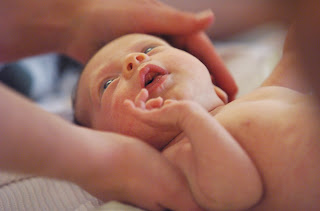
The baby is finally here, and everyone wants pictures! But every time you try to take pictures, your beautiful baby looks like a little wrinkly old person instead of that exquisite being you see before you. That is why many people consider hiring a photographer to take beautiful newborn photography . Well - you can do it yourself. You just need to learn my secret. Here are some tips to capture your newborn for the best results.

- First things first - Turn off the Flash! Use window light for the best natural soft light to show off your baby. Find a window that has an abundance of good light

- not direct sun light streaming in, but good indirect sunlight.

- Remove clutter from the background of your shot by putting the baby in a carrier with a solid colored blanket covering it, or on the bed with white sheets.

- Remove the babies clothing down to the diapers. Less clothing is better for newborn photography to really show the baby as they tend to not fit clothing well at this age, and clothing is more of a distraction. If the diapers have cartoons on them, try to cover the cartoons by folding the diaper over, or putting fabric over that area - or take your chances and remove that diaper! Work quickly at this point if you choose this route.

- With your camera ready, making sure the babies face and body is turned toward the light from the window, start taking pictures from different angles. Try to fill the frame with the baby and the solid colored blanket or sheet - avoiding additional clutter or items that may get into your background. Do not try to get the baby to smile - just take a series of images from different angles, with some of the baby looking at the camera and some of the baby's profile, some of the top of the head etc. Keep working your way around the baby talking and singing to your baby to try to engage them. If the baby starts fussing, soothe them as needed and when they are calm, try again. If they fall asleep - no problem - photograph them while sleeping! Take more pictures than you think you need - you never know which ones you will like. Make sure to get come full body, some half body and some close ups of face, hands, feet and other cute, memorable body parts - like the fuzzy wrinkly shoulders, funny hair lines, and more.

- Now it is time to develop the images- whether on your computer or at the lab, develop your newborn photography pictures and then sit down and go through them, looking with an artistic eye to choose the ones that capture the baby that you see, and this time in your life.

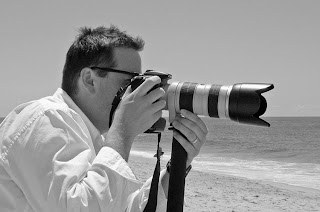
Study Photography Today


Many keen and budding photographers feel that taking a photography course is the best way to help them study photography , improve their photography and ultimately the quality of the photographs they take. In this article I set out some of the key things to look out for when choosing a course. So, if you want to improve your photography then this may be one of the most important articles you will read for a long time.

The best courses are a mix of theoretical study and practical application. In order to learn the most you need to be given a chance to implement and practice the things you learn so choosing a course with a focus on practical training is a must. Any successful photographer will tell you that you can read all the books in the world but the time when you learn the most.

From experience the best kind of course for photographers to take is some sort of home study course. Doing such a course allows you to study in your own time and fit your study and shooting around the rest of your life. With classroom based training it is all to easy to miss a few classes here and there and miss out on valuable learning that you have paid for.

Another key benefit of home study photography courses is that they tend to be a lot cheaper than classroom based photography courses. The lack of classroom and physical support means that in general home courses cost on average of one tenth the cost of classroom based courses.

Do you want to learn to improve your photography but don't have the time or money to attend a photography course? This is a situation virtually all photographers have found themselves in at some point or another. In this article I'll discuss some of the benefits of studying a photography course from home and tell you how to find the best one for you.

I hear all the time from amateur photographers that have taken the plunge into the world of photography by buying a digital SLR camera. Often after a few months of great photographs people get frustrated or even disillusioned that they seem unable to take their photography to the next level. It is not uncommon to feel that the money spent on your SLR camera was wasted and maybe you should have stuck to your compact digital.

There are many photography courses run all over that aim to help you improve your skills however many of us are unable to afford the high course fees or take the time off work to attend the often multi day courses. Well the simple solution is to take a home photography course.

Benefits to Study Photography at home:

There are two main benefits to these types of course:
Time - As you are not committed to attend college courses you are free to study in your own time. You can fit your photographic studies around you job, family, social life etc as you see fit.

Cost - By their nature home study courses in photography tend to be much cheaper than class based ones. The main reason for this is the course provider has no overheads such as classroom hire, enabling them to offer their services at a much lower price.

Choosing the right course can be a difficult process so it is best to look at some reviews first.

Space Photography


Today I'm going to discuss space photography . No I am not talking about the dark black area above us that we see at night. I am talking about the space of the photograph within the borders of the photo. You see there are various areas that you can use the space in your photograph. If you know how to use the space in your photo right you can take much better shots. If you don't use the space right you can end up with photos that just seem off and are not visually pleasing.

First off, there are two different types of space when it comes to photography.

Negative Space

This type of space is the space that is in relation to the object of importance of the image but not the object itself. The negative space is the are on the photo that does not include the object or focal point of interest. For example, the negative space of a picture of a soccer ball with a white background is the white background.

Positive Space

I am really sure that you can guess what positive space is now that you know negative space. Yes, it is the space that comprises of the object or focal point of interest in the photograph. This area is where you are going to want your viewer to pay the most attention to.


Many photographers only pay attention to the positive space but in reality the negative space plays a major role in the photo as well. Knowing how to master the use of negative space can make the positive space that much more appealing. The amount of this negative area that you use can make your photo either look trapped and lacking in space or like its liberated and open.

The background of the subject can have a very large role in the picture. The background is the negative space and usually does one of two things in photography. It either is neutral and blank or it is filled with things that contribute to the object of importance.

The use of the space in your photograph is what can really make your photo work or feel as if it is missing something. Experiment with this and do not be afraid to try different things out.

Digital photography has lots of different components to it. There are the technical parts and the compositional parts. And in these compositional parts there is another part...the space. Space is something that can make or break a photo when used. You can use it to take much better shots. This article will show you digital photography tips for using space right.

What are these different types of space?
There is, first off, negative space. This basically is all the space that is around the subject you are taking a picture of. All of your photos have negative space. Many people think of the space around the subject as unimportant but this is wrong. Using the negative properly can make for much more interesting shots.
For example, most people take shots and isolate the subject to a blank background. This makes the shot simple and more compositionally sound. However, a blank background does nothing to add more meaning to the photo. It in no way helps define the message and concept of the photo.

Using negative space properly can make for much better shots. Proper use of this space can make your photos much more powerful and captivating. For example, if you have a photo of a person praying behind a blank background it'll look fine. However, put the subject behind a war field or a church and the surrounding space adds more meaning.

Positive space is also important. This is the space that comprises of the subject of interest. You can use lots of this space or a little. Using a photo that is mostly positively spaced will make the subject look much closer and intimate. A shot with little positive space will make the subject look less important and less powerful.

Space photography is very important. The space of your photo is very strong and will be the matter of getting the right pictures. Practice and you will start seeing that this is true.

Advertising Photographer


We human beings are a bag of various emotions and our range is far wider than any other living species on earth. And, when tickled, these emotions compel us to behave in different ways. It is due to this fact that advertising photography has become such a powerful media which makes us behave in a plethora of ways.

Advertising photographer tickles a number of human emotions and basic needs and desires. They are the stimulators for different kinds of human behavior; and this includes consumer behaviour. When we see the images on those glossy magazine advertisements and flashy website banners, they go right to our brain and communicate their message. An advertisement is able to drive home a point through the images.

A variety of human emotions and wishes are tapped by advertising photography. A girl who wants to make her lovely tresses look shiny and bouncy is liable to fall for the shampoo advertisement which shows her favourite model with long flowing radiant hair, because she wants to look equally beautiful. On the other hand, a young boy who shouts "Pepsi", when asked what he would like to drink, is most likely remembering those flashy red and blue colours of the brand, and his favourite sportsman who are endorsing the same.

Advertisement, irrespective of all the blessings or brickbats it gets, has always defined and directed our lifestyle. It has got inspired from how we live and also has insprired us to change our own way of living. Both words and pictures in advertisements have played critical role in informing us, educating us, inspiring us, enlightening us and also humour us. Let us see the role of advertising photography in different kinds of medium.

Advertising Photography for the Print Media
Print Media is all pervasive. It is closely entangled and enmeshed with each of our lifestyle. Advertising photography in print media has immense power and a smart advertiser should know how to use the power in an optimum way.

Advertising Photography for the Static Ads
Static ads would refer to the various ads that we see while walking down the street, driving around, waiting for bus, etc. They are the kiosks and billboards that are put up in different roads and streets. Advertising photography plays a more important role than words. No one on the road has the time to look up and gape at advertisements. It is therefore the pictures that do the talking.

Advertising Photography for Online Media
Another arena, where advertising photography has gradually and surely made an indelible effect – the online media. We come across different websites, online ads like banners, pop ups etc. What do you think makes a visitor actually take notice? Yes! You are absolutely right – its the picture used in those ads.

Advertising Photography and Advertising Photographer
Advertising photography is no small job. In order to be impressive, a picture needs to be dealt with very carefully. The proper use of light and location, the right weather conditions, the model and how should it be clicked – all this can be decided better by a thoroughly professional person who has the talent and experience for advertising photography.

Maternity Photography - Beauty Beyond Sexyness


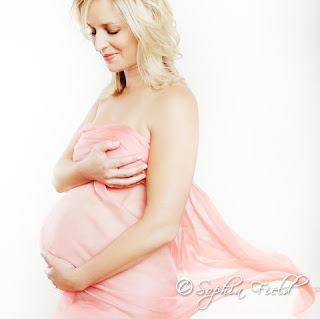
The time of pregnancy is very important to a woman. She is waiting impatiently for that special time to meet the person that has been with her for 9 months. However, if this is a first pregnancy, many women now like to also capture the special moments of carrying their little one. Maternity photography does not only show the moments of pregnancy but also shows beauty of the mother without being sexy. It is the true meaning of pregnancy that is capture by the lenses.

When your family is expanding, you want to take tons of pictures to remember the special time. Also, a good pre-baby portrait is a great display piece, and it will be treasured for years to come. Maternity photography and pictures of soon-to-be parents can have their meaning enhanced with special props and poses. This article will outline some tips for amateur photographers wishing to record such a joyful and wonderful time in someone's life.

For pictures of mothers-to-be, you want to be sure to emphasize the fact that something is indeed different-thus, a picture of a pregnant woman's back is probably not the best shot you can set up. Here are some tricks and poses to try for your glowing almost-mothers:

Opt for Silhouettes. As a mother's rounded belly is the most noticeable sign of her pregnancy, you should take a few shots that show off the curve of her tummy. Silhouettes can be beautiful, especially when you have a powerful backgrounds, such as the beach or a sunset. Even if you don't use the shadow effect of having a pregnant woman appear black against the background, you should still consider taking most of your pictures from the side.

Capture the Emotions. If you do want to take a picture from the front, you may want the mother to have her belly exposed. This way, we can still see the physical effects of having a bun in the oven. To draw attention to the bulge, you could have the mom look down at her stomach, or have the father looking down on it with love. Also, you can emphasize the belly by getting the mother to place her hands on either side of the unborn child.

Look at the Details. Close-ups of a swollen belly can be wonderfully simple portraits. Also, you may be able to take a shot the shows a belly button that is now sticking out. Of course, no one wants any stretch marks showing, so you can always have the mother wear a tight shirt that still provides an outline of the protruding belly button. You want to make the almost-mom feel beautiful; consider taking a picture of her outside in the sun so that the light glows off of her tightly stretched skin.

Show the Family. Of course, the soon-to-be-father is another hugely important part of the unborn baby's life and the maternity photography . Thus, try to incorporate the daddy into a few shots as well. This can be a classic picture with the new father holding onto his companion's belly from behind. Also, consider pictures with siblings and pets. The older brothers and sisters can be shown kissing the mother's belly, or small pets can rest on the curve. Dogs can give their own "kisses" by licking the mother's tummy.

Consider Creativity. If you want to try some nontraditional maternity poses, you may want to take a picture of the mom from above, with her belly sticking out so far that she can't see her toes. Also, it can be humorous to contrast the mom and the dad. Have the mother stand holding her belly, and the dad back-to-back with her holding an round object that is special to him right by his belly. For example, he can hold a soccer ball while she holds her baby.

Selling Photography


Anyone with the ability to use a camera correctly has the potential to go on the business of selling photography . Picture agencies handle images of every subject and are always looking for emerging talent.

Pictures libraries and stock agencies are in the business of selling images. The don’t give you advice on how to take better images. Their purpose is business - they sell images to magazines, book publishers, the travel industry and many other industries that use images.

Many photographers look upon agencies as a last resort to sell their work; if you have been unable to sell any of your images, the chances are that most agencies won’t accept them.

If you are interested in an agency selling your images, you must be able to produce high quality images which are suited to the agencies market. Check out their website to view samples that are currently in use.

If you feel your work meets their standards and suits their customers - then approach them by e-mail or by standard mail. But, before placing your work at an agency make a short-list of the agencies that seem to suit your work. Contact each agency outlining your work and which magazines have already published your images. If an agency is then interested they will ask you to send them samples.

If an agency accepts your work, don’t take this as a guarantee that your images will sell.

Don’t approach an agency until you have a large collection of images. Minimum first submissions can consist of anything from 50 images to 500 and regular submissions are normally required thereafter. Most agencies work on a commission basis - 50 % being the standard rate. If an image sells for two hundred euro - the photographer receives a one hundred euro fee.

When an agency takes on a photographer’s work, they normally require a four or five year retention period. Agencies normally sell the reproduction rights of a pictures - the image being licensed to a buyer for a specified purpose.

It may take as long as six months before an agency sells a picture belonging to you. First they need to scan your images if they are submitted by film; then they need to contact their clients and let them know that there is new material available - all of this takes time, so you must look at supplying a picture agency as a long term investment. It is only when you have several hundred images placed in a library that you’ll start to see regular sales on your selling photography .

Remember: agencies can’t sell images if there isn’t a market for them and placing images at an agency does not guarantee you sales.